Nikola Tesla Secret
Showing posts with label World&#039s. Show all posts

Sunday, 10 January 2016

Half Of the World's Newest Power Plants Are Using Renewable Sources


pv power plant


Nearly half of all the world’s power plants brought online in 2014 produce their energy by renewable means. No longer a niche market, rapidly expanding green energy is set to become the world’s main source of electricity within twenty years.


The International Energy Agency (IEA) says that green energy is currently the second-largest source of the world’s electricity, and it is gaining ground against its non-renewable and more polluting fossil fuel counterparts. A record high of 130 GW of renewable energy capacity was added to the power sector in 2014, in part due to supportive government policies and subsidies for solar and wind projects. While coal is still the world’s most relied-upon fuel for power plants, there has been a clear shift towards cleaner renewable energy sources, according to IEA’s World Energy Outlook 2015 report, published in November. They predict that at the current rate of the industry’s growth, renewables-based generation will reach 50% in the European Union, 30% in China, and 25% in the United States and India by 2040.


Global economic growth is expected to continue at current rates, and energy demand will grow by nearly one-third between now and 2040, according to the IEA report. They predict that China will soon reach a plateau of economic growth, and their demand for coal will remain stable or decrease in the next decade, but there will be dramatic increases in the energy demands of other countries in the developing world, like India and Indonesia. By 2040, Asia will be the consumer of up to 80% of all regionally traded coal and oil. But even as they pour more energy into their growing economies, many of those nations are also working towards better energy efficiency, adopting new technologies and government policies that aim to reduce energy waste. With improved efficiency and a global and regional shift towards wind and solar energy, we can expect a dramatic reduction in the rate of growth of energy-related carbon emissions coming from the energy industry.


Even so, emissions are expected to continue rising, with a global average temperature increase of almost 3C predicted by 2100. That temperature rise would have global implications: changing weather patterns and a rise in sea level will affect agriculture and increase water scarcity in many regions. The IEA report suggests that a “major course correction” will be necessary in order to reverse that trend and reach the world’s climate goals. The report also warns that measures towards energy efficiency and the shift towards renewable energy could be undercut by consistently low oil prices. With cheap fuel giving less incentive to developing economies to reduce their oil consumption, up to 15% of the potential energy savings from efficiency measures would be lost. Up to $800 billion of energy efficiency investments planned for the next 25 years could be discouraged if the price of oil remains low.


The price alone, though, isn’t enough to cripple green energy’s rise to the top spot in energy production: continued subsidies and government policies that benefit oil and coal companies are keeping the playing field uneven and putting green competitors at a disadvantage. It says something about current global attitudes towards climate that green energy power plants are being built so quickly despite the cheap appeal of the status quo.


Half Of the World"s Newest Power Plants Are Using Renewable Sources

Saturday, 19 September 2015

World's first smog filtering tower goes on tour


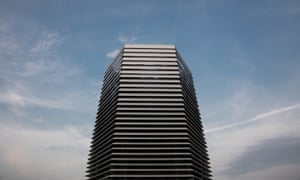
The smog-free tower in Rotterdam sucks in dirty air, filters it and returns bubbles of clean air through its vents.

Photograph: PimHendriksen.com/Studio Roosegaarde

The Dutch city of Rotterdam has opened the world’s first smog-free tower.


Co-designed by Dutch artist Daan Roosegaarde, the seven-metre high tower sucks in dirty air like a giant vacuum cleaner. Ion technology then filters it, before returning bubbles of smog-free air through the tower’s vents. It is able to clean 30,000 cubic metres of air an hour, according to Roosegaarde.


Clean air is a precious commodity. A new study has found that more than three million people die prematurely due to air pollution each year. This is projected to double by 2050 if the problem isn’t tackled.


“The smog-free tower contributes to a debate that shouldn’t be confined to politics,” says Rotterdam’s mayor, Ahmed Aboutaleb. “Air pollution is a matter that affects us all, and it requires a serious discussion. But we do need innovators like Daan Roosegaarde to start the conversation at another level.”


Roosegaarde has far-reaching ambitions for the tower, which is part of his Smog-Free Project. “It’s not only intended to be a local solution that creates clean parks or playgrounds,” he explains. “It’s also a sensory experience of a clean future, a place where people can experience clean air.”


He hopes to bring together governments, NGOs, the clean tech industry and ordinary citizens. “We can work together to make whole cities smog-free,” he says. “We can wait – or we can participate.”


The man behind the tower’s Hoover-like cleaning filter is Bob Ursem, a nanoparticles expert at the Delft University of Technology. In outdoor tests, the filter has cleaned the air by 60%, measured by the share of nanoparticles removed, and in indoor environments the reduction is even more significant, he claims. “We’ve installed it in a parking garage here in the Netherlands and it sucks and cleans both the inside and outside air,” Ursem says. “Inside the parking garage, the air became 70% cleaner.”


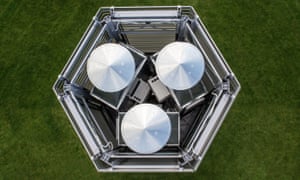
An aerial view of the smog free tower


Facebook
Twitter
Pinterest


An aerial view of the smog free tower. Photograph: Studio Roosegaarde

But it’s not Rotterdam where the need for air filters is greatest. According to the World Air Quality Index, most of western Europe enjoys clean air, with exceptions including London, where air quality is classified as moderate. It’s a different story in the booming cities of the developing world and the Bric countries. Air quality is much poorer in China and Malaysia, for example, where most cities feature air deemed unhealthy for sensitive groups. The air in several cities, including Delhi, has been classified as very unhealthy, indicating emergency conditions.


The tower’s creators recognise this and, after its run in Rotterdam, the tower moves to Beijing, a city suffering from very poor air quality.


Earlier this month, Chinese authorities shut hundreds of factories in Beijing and banned half of the country’s 5m cars from the roads in preparation for a gigantic military parade. In the days leading up to the parade, the air quality improved, resulting in pristine blue skies for the parade, only to return to smog when the ban was lifted.


According to Ursem, Rotterdam’s filter can easily be scaled to help alleviate Beijing’s smog. Yet while smog filters may offer some hope to suffering residents of booming cities, as the military parade ban suggests, no one technology or tactic can be as effective as working on the root causes of air pollution. In the tower’s case, the filters would be costly too . While neither Roosegaarde nor Ursem would disclose the cost of the tower, the filters they have developed range in price from €1,600 to more than €118,000.


Aboutaleb acknowledges the innovation’s limitations: “It may not be the answer to all our problems, but this shouldn’t be the main objective,” he says. “The objective must lie in a different perspective, a refreshing approach to a global problem.”


Esben Alslund-Lanthén, a researcher at the Danish sustainability thinktank Sustainia, says the filter is not a large-scale environmental solution but can be useful as an awareness-building: “It shows how polluted our cities are, especially from energy and transportation”.


A person who has inhaled the tower’s healthy air may find it a shock to return to the more polluted city air outside the clean bubble.


“Whether the air filter is scalable or not depends not just on its technical viability, but on whether city governments are good at learning from each other to bring about change,” argues Sascha Haselmayer, founder and CEO of Citymart, a firm that connects urban innovation projects with cities.


Some local politicians seem keen to encourage clean air-thoughts among their residents, perhaps hoping that it will make them more amenable to restrictions on fuel and dirty energy. New York City, Ursem reports, has just ordered 12 street-cleaning cars featuring the air filter. There will be a pilot air-filter project in Eindhoven, and Ursem’s team is in negotiations for a similar project in Paris.


World"s first smog filtering tower goes on tour

Thursday, 4 June 2015

Camfil Launches the World's Most Energy-efficient HVAC Air Filter


LONDON, June 3, 2015 /PRNewswire/ —


Camfil, the world leader in air filtration technology,has launched the most energy efficient bag filter, the Hi-Flo F7 50+.  


The new Hi-Flo II is a new and enhanced version of Camfil’s award winning Hi-Flo low energy air filter. Featuring aerodynamic pockets for optimised performance, the new low energy air filters have been rated A+ by Eurovent. It saves up to £30 per year for every installed filter. FMs and Energy Managers and building owners will be able to meet the much tougher requirements for energy savings specified in Eurovent’s 2015 energy efficiency classification system for air filters.


Bill Wilkinson, Managing Director, Camfil UK said:


“The new Energy Saver Hi-Flo filter from Camfil is a major ‘quick win’ for switched on Energy Managers and FMs. The pay backs within revenue budgets are typically less than 3 months and air filters are designed to be changed, unlike other components within the ventilation system, so consequently do not put any pressure on capital budgets when upgrading to low energy air filters.” 


Eurovent – The new classification for air filters 


Eurovent’s new, objective energy efficiency classification has now been implemented. Today all air filters can be graded from A+ to E. The grade A+ stands for the lowest energy consumption and E for the highest.


About the new Hi-Flo II 


The top model, M7 in filter class F7, has received the highest rating from Eurovent (A+) for its outstandingly low energy consumption. In addition to saving more energy, the filtration efficiency of the new Hi-Flo II M7 is significantly higher than the performance demands for equivalent filters in EN779:2012, the European standard for general ventilation filters.


HVAC systems heat cool and clean the air distribution within some 200,000 buildings in the UK. That’s approximately 7,300 organisations consuming 35% of the UK’s energy consumption. The Federation of European Heating, Ventilating and Air-Conditioning Associations have estimated that within the EU there is a potential annual saving of 5TWh available by switching to Low Energy Air Filters. This would equate to £500 MILLION OF ENERGY SAVINGS IN THE UK.  


*Compared to the previous award winning Hi-Flo M7 low energy air filter.  


More information: 


Hi-Flo Brochure 


Video 


http://www.camfil.co.uk


http://www.lowenergyairfilter.co.uk


About Camfil Group  


Camfil is the global industry leader in clean air solutions with more than 50 years of experience. Our solutions protect people, processes and the environment to benefit human health, increase performance, and reduce and manage energy consumption. Twenty-five manufacturing plants, six R&D sites and over 65 local sales offices worldwide provide service and support to our customers. The Camfil Group is headquartered in Sweden but more than 95% of sales are international. The Group has around 3,700 employees and sales in the range of SEK 5.5 billion.


Representatives from Camfil UK are available for media interviews and speaking opportunities. For more product information on Camfil or to arrange an interview contact: Kirstie Colledge, SMPR (Simply Marcomms Limited), 18 Boiler House, Electric Wharf, Coventry, CV1 4JU, Tel:+44-(0)870-199-4044, Email: katie@simplymarcomms.co.uk


SOURCE Camfil UK


Camfil Launches the World"s Most Energy-efficient HVAC Air Filter

Thursday, 5 March 2015

Sunny days: The world's biggest solar energy projects

Clean energy is hot.


A groundswell of support for rewnewable power has sprung up around the world over the past several years, with governments, utilities and corporations racing to deploy or purchase green electricity.


Solar power is among the technologies leading the energy market in new deployments. In the U.S. last year, 36% of all new electric capacity came from solar, and the cost to deploy it has dropped more than 63% since 2010. In many U.S. states and in nations around the world, it’s as cheap to use solar power as it is to buy electricity generated through coal-fired power plants.


Corporations are taking note. For example, Apple last month announced it would invest close to $1 billion in a solar power plant being built by First Solar in California; the move rocketed Apple past Walmart as the largest corporate user of solar power. Venture capitalists, too, are investing in renewables to the tune of $310 billion last year. Put simply, solar power is no longer just the bastion of crunchy granola types and companies hoping to improve their public image. 


The global installed capacity of solar electricity has increased six-fold between 2010 and 2013, from 23 gigawatts (1GW is a billion watts) to 180GW.


Utility-scale solar power plants are still larger than private installations, which typically offer far less cpacity. As adoption increases, governments and utilities are in a race to see who can build the largest plants the fastest. India is planning a series of solar parks that will produce 10,000MW of solar power, and both India and China plan on deploying 100GW of new solar power between now and 2022. 


Here are the world’s largest solar power plants, as well as a look at a few other projects that will top the list in coming years.


Sunny days: The world"s biggest solar energy projects

Wednesday, 31 December 2014

Can Houseplants Really Clean the World's Smoggiest City?

NEW DELHI—On the roof of an office building in India’s capital, the world’s smoggiest city, Kamal Meattle has a unique tactic for cleaning the air: a greenhouse with 400 common plants, including mother-in-law’s tongue.


Meattle, the CEO of Paharpur Business Centre, has 800 other plants spread throughout the building’s lower six floors, greening each room and hallway. Their job: remove soot and other chemicals from the often charcoal-colored outdoor air.


In India, where almost no one wears filter masks on the streets as many do in China, Meattle is seen as a radical. He says he’s even been dubbed the Mad Hatter of Nehru Place, a high-tech hub that’s home to his leafy building and an adjacent lot he converted from a slum into an oasis of 2,000 trees.


He uses rainwater collected in cisterns to spray the trees so they can grow faster and absorb more pollutants. He’s urging India’s new government to require rainwater harvesting and to paint roofs, and buses, white. And he’s pushing to build one of the world’s largest energy-efficient office parks, complete with greenhouses.


Meattle hardly seems a firebrand. A soft-spoken grandfather, he’s a scion of India’s elite who attended school with Rajiv Gandhi and later earned a chemical engineering degree from the Massachusetts Institute of Technology. He sees his efforts, touted in a 2009 TED talk that’s attracted more than two million views, as common sense.


“Sustainability is good business, and energy efficiency is low-hanging fruit,” says Meattle, whose 25-year-old building was India’s first to earn the top rating (in 2010) for a retrofit from the U.S. Green Building Council. He says it uses one-fifth as much energy per square meter as the average office building in India. At least 10 percent of its energy savings is due to plants, which obviate the need to pump in ambient air.


His horticulture is also a practical nod to ancient tradition. “Why did Buddha sit under the peepul [or bodhi] tree?” he asks, adding that the sacred fig with heart-shaped leaves releases oxygen even at night, allowing those beneath a light sleep.


Good Business—and a Health Imperative


As Meattle tells it, he really had no choice but to try something new. “My doctors told me to leave” India in 1992, he says, citing his reduced lung capacity because of the city’s air pollution. He decided to stay, seeking instead to solve a society-wide problem that’s become increasingly dire. (See related story: “In Climate Talks, Spotlight Turns to India.”)


“Delhi’s unfit for living between October and March,” Meattle says, noting how often its air pollution veers into the “very unhealthy” or even “hazardous” category. The U.S. Embassy, which posts its air quality data on outdoor monitors, has issued warnings against letting kids play outside.


smog at India Gate in New Delhi

Smog envelops the landmark India Gate in New Delhi, the world’s smoggiest city.


Photograph by Altaf Qadri, AP


In fact, New Delhi’s smog is now nearly three times worse than Beijing’s, the World Health Organization reported in May, based on measurements of fine particulates, or PM 2.5. The WHO found that the city had the world’s dirtiest air, and the cities ranking second through fourth are also in India. (See related story: “What Step Is Crucial in Fighting Cities’ Air Pollution?“)


India’s indoor air pollution is even worse, exacerbated by the use of woodstoves and by chemical emissions from appliances. The WHO estimates it’s India’s second biggest killer, after high blood pressure, and contributes to 1.3 million annual deaths. (See related story: “WHO Report: Indoor Air Pollution Is Greatest Environmental Health Risk.”)


India’s press has only recently begun to focus on the issue, but the people are still largely in denial, says Barun Aggarwal, director of the Paharpur Business Centre’s Breathe Easy program and Meattle’s son-in-law.


“We are Indians. We have iron lungs,” Aggarwal says is a common attitude, adding that many have adopted Nietzsche’s “what-doesn’t-kill-me-makes-me-stronger” mentality.


Meattle, after reviewing research by NASA and others, drew up a plan that focuses largely on three common houseplants because of their complementary abilities to detoxify indoor air and enrich it with oxygen: the areca palm, mother-in-law’s tongue, and the money plant.


Before outside air is allowed indoors, his 50,000-square-foot facility uses a scrubber to wash it with water to reduce the levels of chemical compounds such as nitrogen oxide and sulfur dioxide. The air then passes through his greenhouse to remove formaldehyde, benzene, and carbon monoxide and through a filter to remove bacteria. No smoking is allowed inside.


Since January 2013, Meattle’s company has created plant-based air-filtering systems for more than 700 homes in India’s capital. It’s also working to clean the air inside the embassy schools of the United States and Germany.


But Can Plants Really Clean the Air?


“It’s a phenomenon that’s growing now,” says Bill C. Wolverton, one of the original NASA researchers and author of the 2010 book Plants: Why You Can’t Live Without Them. Wolverton has been working in Japan, where plants have been used to make 50 to 60 “ecological gardens” in hospitals. He also says there’s budding interest in South Korea and China.


smog at India Gate in New Delhi

The Paharpur Business Centre’s greenhouse focuses largely on three plants: mother-in-law’s tongue, the areca palm, and the money plant.


Photograph by Wendy Koch


NASA published several studies in the 1980s showing interior plants could purify the air in sealed test chambers akin to a space station. It later tested the value of plants to both clean air and recycle waste in a tightly sealed building known as the BioHome.


Subsequent studies have also suggested that plants could help clean indoor air. In 2009, via greenhouse tests, a Pennsylvania State University research team found plants could reduce indoor ozone, which can be emitted by copy machines and laser printers.


Not everyone is convinced. “I certainly would not rely on plants to clean indoor air…To get them to work, you’d need too many plants,” says John Girman, former senior science adviser at the U.S. Environmental Protection Agency’s Indoor Air Division. He says a 1,500-square-foot house would need 680 plants to duplicate NASA-like benefits, and the result would be “an indoor jungle” with moisture problems.


Girman co-wrote a study criticizing research such as NASA’s that tested plants only in sealed chambers, which don’t replicate the actual conditions of buildings with ventilation systems that can bring in fresh outside air. He says increasing ventilation is far more effective than using plants to clean the air.


But what if the outdoor air is filthy? “I don’t have a good solution for India,” Girman says.


Meattle’s building has been proved to alleviate health problems, according to a 2008 study by the Chittaranjan National Cancer Institute and the Central Pollution Control Board. The study compared 94 nonsmokers working there with nonsmokers employed elsewhere in Delhi. It found the former had fewer cases of eye irritation, headaches, hypertension, and respiratory problems.


“We have an air treatment plant,” Meattle says of his innovative combination of scrubbers, filters, and greenery. The result, he adds, is fewer employee sick days, greater productivity, and air as clean as that in Davos, Switzerland.


On Twitter: Follow Wendy Koch, and get more environment and energy coverage at NatGeoGreen.


The story is part of a special series that explores energy issues. For more, visit The Great Energy Challenge.


Can Houseplants Really Clean the World"s Smoggiest City?

Wednesday, 2 April 2014

World's First Autonomously Cleaned Solar Park In Israel

A significant obstacle to maximizing solar energy output is the accumulation of dirt and dust on the photovoltaic solar panels, which reduces output considerably. This is especially true for solar energy parks located in deserts. But cleaning the panels of a entire park may take days, during which the park works at a less than optimal level. The dirt and dust accumulated between cleaning cycles also need to be taken care of as the soiling could lead to a decrease in production levels.


Ecoppia, a privately-held, Israel-based company, has provided a solution to this problem. The company develops energy-independent E4 cleaning robots that use a soft microfiber and air flow cleaning system to remove 99 percent of dust daily and put zero load on the panel surface. The company has installed its robotic system at Ketura Sun Solar park, which is jointly owned by Siemens AG and Arava Power, located in Israel’s Negev desert. Ecoppia reports that the 8-hectare facility is serviced by nearly 100 E4 robots that clean the solar panels every night.


Instead of using water, Ecoppia’s centrally-controlled robot crew uses microfibers and controlled air flow to push the dirt off the panels.


“We conducted a thorough worldwide search for a cleaning solution that could deal with the challenging weather conditions in our solar parks. Only Ecoppia’s solution showed actual significant uplift in production, while offering an extremely appealing business model. We are proud to be their partners,” Arava Power CEO Jon Cohen was quoted as saying.


by RTT Staff Writer


For comments and feedback: editorial@rttnews.com


Technology News


World"s First Autonomously Cleaned Solar Park In Israel