Nikola Tesla Secret
Showing posts with label really. Show all posts

Saturday, 19 March 2016

Mark Zuckerberg Either Really Wants China To Like Him Or Has A Death Wish


1. Facebook’s Mark Zuckerberg has made clear his love of China, but this is ridiculous: Friday, when the local air-quality index (AQI) was about 300, Zuckerberg and his team decided to go for a run in Beijing.


“It’s great to be back in Beijing!” Zuckerberg exclaimed, posting along a photo on Facebook, which is blocked in China.


(Hong Kong student activist Joshua Wong pointed out the elephant in the room — that people in China reply on VPN to browse sites like Facebook and YouTube — when commented on the post: “How to update your Facebook in China?”)


2. For those of you who are less familiar with the AQI, it means the air they took in was either “very unhealthy” or “hazardous.” Unless, they wore any special sort of nasal air filters.


“Very unhealthy” air means that it can cause “increased aggravation of heart or lung disease and premature mortality in persons with cardiopulmonary disease and the elderly; increased respiratory effects in general population,” according to U.S. Department of State’s Mission China project.


(And if they were wearing nasal filters, that’s a problem: they don’t really work.)


3. So here’s where it gets fun: if you pronounce “Facebook” slowly, syllable by syllable – “Fei Si Bu Ke,” in Chinese, “非死不可,” it means “have to die.” It’s been a widely-known pun among Chinese internet users for years, but now is it’s time to shine.


4. By this point, Mark Zuckerberg has made his point very clear to the world – he loves China, like, crazy in love.


5. He’s been practicing speaking Mandarin. One of the first places he flashed his Mandarin was Tsinghua University, one of China’s top elite universities. His Mandarin was awkward, but he got a lot of encouragement from the audience to carry on.


6. By the Chinese New Year last month, Zuckerberg’s Mandarin had caught up with his Chinese-American wife, Priscilla Chan, and even surpassed her, at least from the way it sounded.


7. And that’s Zuckerberg wearing a red tie, wooing Xi Jinping, China’s president, by speaking only in Mandarin last year.


Pool / Getty Images


  1. So what do you think Zuckerberg really wants?


    1. He’s acting like any businessman would in an attempt to access China’s markets.


    2. He’s just playing dumb so that the president will let his company in, then let Chinese people into the free internet.


    3. He’s so desperate to get into China that he’ll destroy his lungs in the process, the poor fool.


Mark Zuckerberg Either Really Wants China To Like Him Or Has A Death Wish


    SHARE YOUR VOTE!


    Check out more articles on BuzzFeed.com!


    Mark Zuckerberg Either Really Wants China To Like Him Or Has A Death Wish

    Tuesday, 14 July 2015

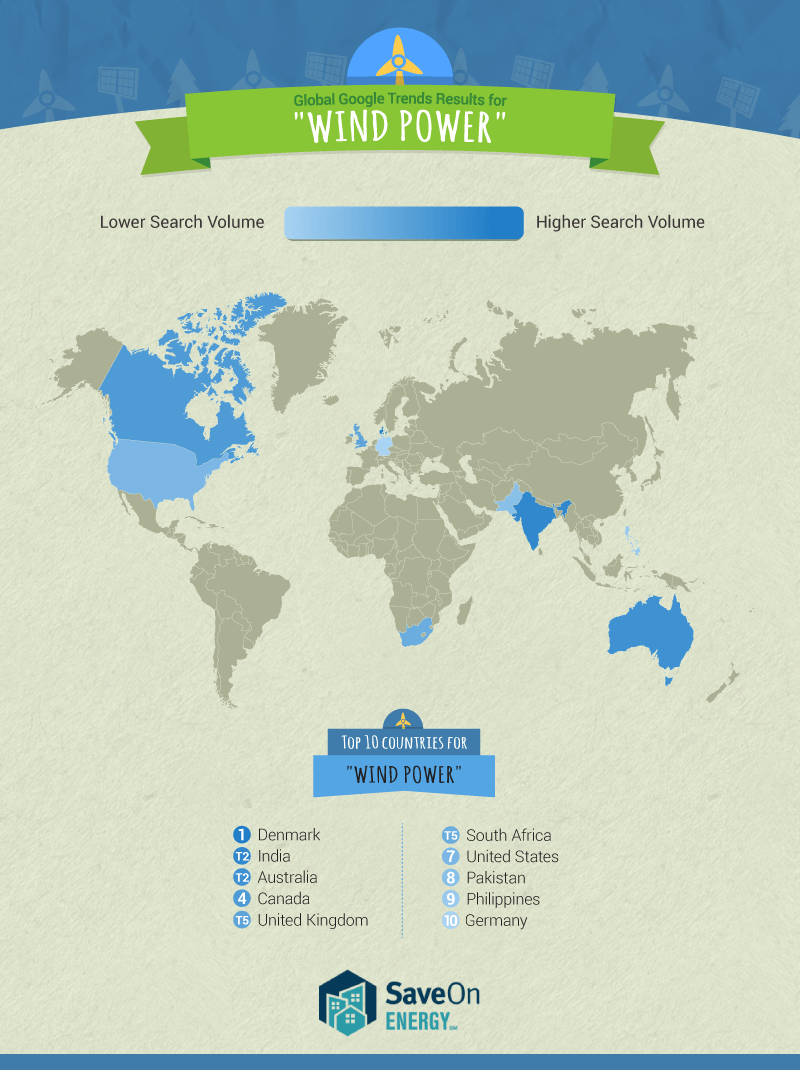
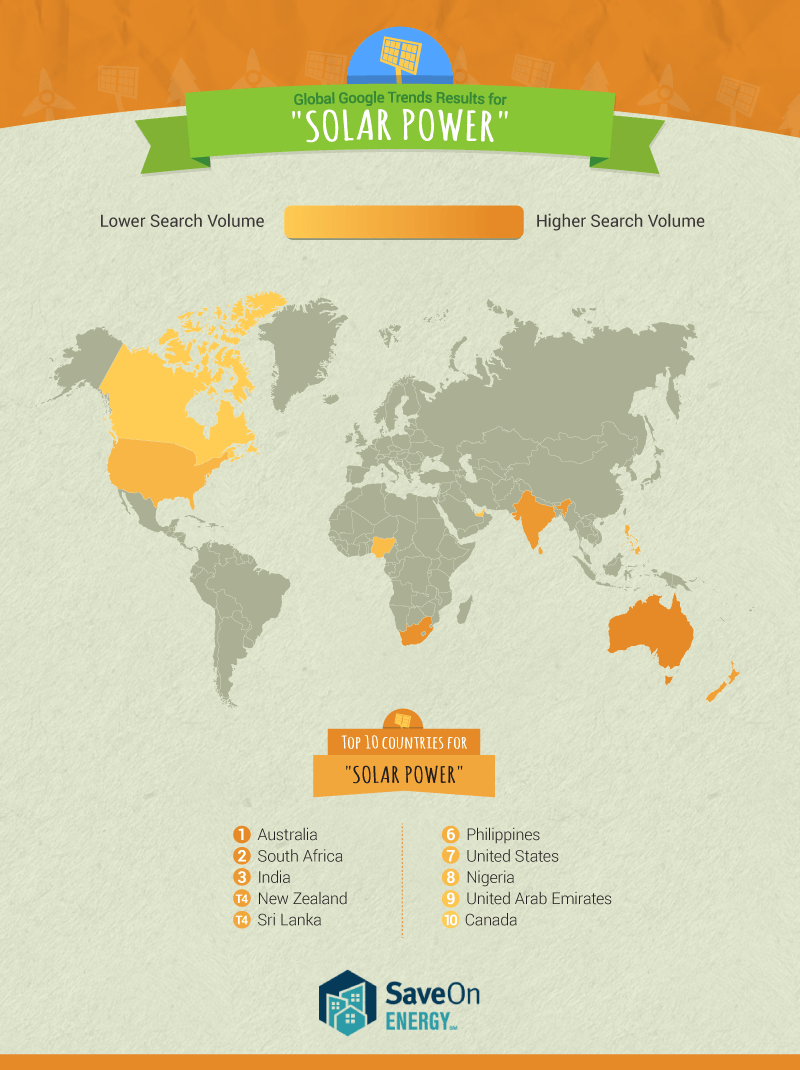
    Australia really cares about wind and solar energy – infographic

    Have you ever wondered what countries spend the most time looking up things like wind energy and solar power? Well, thanks to this research, you no longer have to.


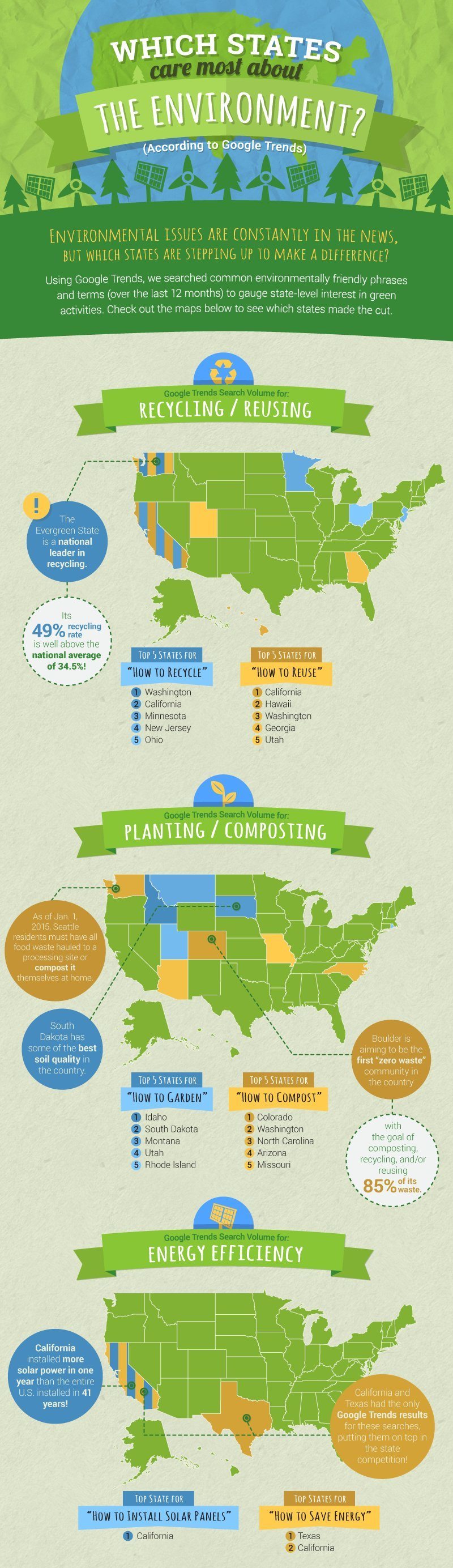
    US company SaveOn Energy looked at Google trends to establish where most people looked up these topics, providing a good clue as to where it is part of the national psyche.


    “We researched action phrases people may search for when looking into certain environmentally friendly activities,” says the company, “then we used Google Trends to rank the results by topic and state.”


    On a global level Australia leads the way. The top ranked country to look up “solar power”, Australia also ranks second with regards “wind power”.


    Naturally enough Europe is only prominent in the wind energy realm. It turns out the lack of sun greatly affects our thirst for solar energy.


    Renewable energy global solar power search


    In the US it turns out that California and Washington State are the places most likely to see people looking up “how to recycle” or “how to reuse”, with Idaho “how to garden” and Colorado “how to compost” emerging top of their class.


    California installed more rooftop solar panels in 2013 than in the previous 30 years combined. Tellingly, it was the only state to see people looking up “how to install solar panels” in any great numbers.


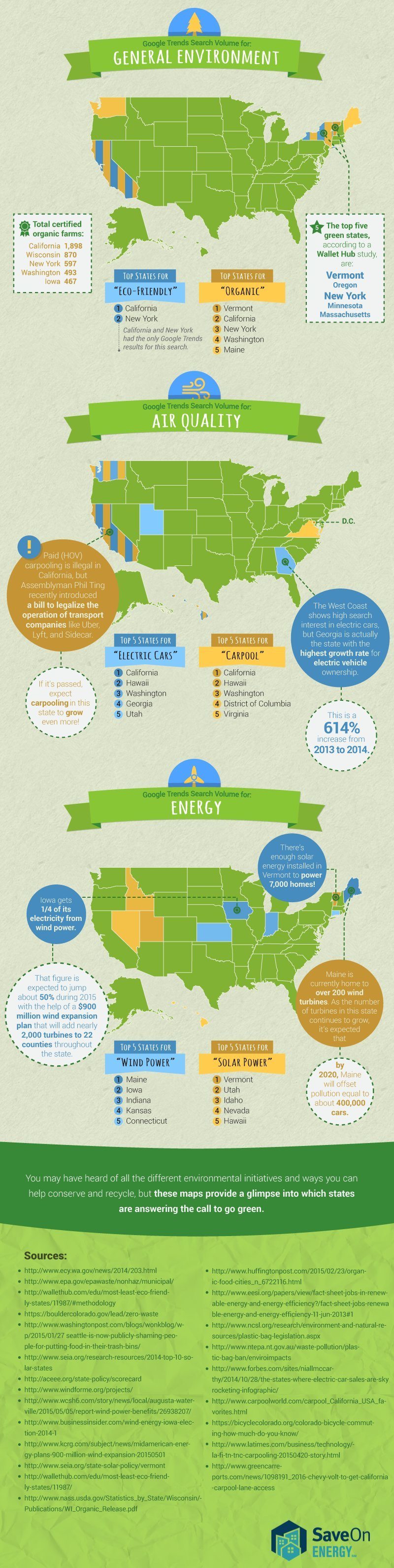
    Air quality is a concern for coastal states, with actual energy production – similar to farming and soil concerns – more prominent as you move inland.


    P12 Renewable energy


    renewable energy


    Main image via Shutterstock


    Australia really cares about wind and solar energy – infographic

    Wednesday, 31 December 2014

    Can Houseplants Really Clean the World's Smoggiest City?

    NEW DELHI—On the roof of an office building in India’s capital, the world’s smoggiest city, Kamal Meattle has a unique tactic for cleaning the air: a greenhouse with 400 common plants, including mother-in-law’s tongue.


    Meattle, the CEO of Paharpur Business Centre, has 800 other plants spread throughout the building’s lower six floors, greening each room and hallway. Their job: remove soot and other chemicals from the often charcoal-colored outdoor air.


    In India, where almost no one wears filter masks on the streets as many do in China, Meattle is seen as a radical. He says he’s even been dubbed the Mad Hatter of Nehru Place, a high-tech hub that’s home to his leafy building and an adjacent lot he converted from a slum into an oasis of 2,000 trees.


    He uses rainwater collected in cisterns to spray the trees so they can grow faster and absorb more pollutants. He’s urging India’s new government to require rainwater harvesting and to paint roofs, and buses, white. And he’s pushing to build one of the world’s largest energy-efficient office parks, complete with greenhouses.


    Meattle hardly seems a firebrand. A soft-spoken grandfather, he’s a scion of India’s elite who attended school with Rajiv Gandhi and later earned a chemical engineering degree from the Massachusetts Institute of Technology. He sees his efforts, touted in a 2009 TED talk that’s attracted more than two million views, as common sense.


    “Sustainability is good business, and energy efficiency is low-hanging fruit,” says Meattle, whose 25-year-old building was India’s first to earn the top rating (in 2010) for a retrofit from the U.S. Green Building Council. He says it uses one-fifth as much energy per square meter as the average office building in India. At least 10 percent of its energy savings is due to plants, which obviate the need to pump in ambient air.


    His horticulture is also a practical nod to ancient tradition. “Why did Buddha sit under the peepul [or bodhi] tree?” he asks, adding that the sacred fig with heart-shaped leaves releases oxygen even at night, allowing those beneath a light sleep.


    Good Business—and a Health Imperative


    As Meattle tells it, he really had no choice but to try something new. “My doctors told me to leave” India in 1992, he says, citing his reduced lung capacity because of the city’s air pollution. He decided to stay, seeking instead to solve a society-wide problem that’s become increasingly dire. (See related story: “In Climate Talks, Spotlight Turns to India.”)


    “Delhi’s unfit for living between October and March,” Meattle says, noting how often its air pollution veers into the “very unhealthy” or even “hazardous” category. The U.S. Embassy, which posts its air quality data on outdoor monitors, has issued warnings against letting kids play outside.


    smog at India Gate in New Delhi

    Smog envelops the landmark India Gate in New Delhi, the world’s smoggiest city.


    Photograph by Altaf Qadri, AP


    In fact, New Delhi’s smog is now nearly three times worse than Beijing’s, the World Health Organization reported in May, based on measurements of fine particulates, or PM 2.5. The WHO found that the city had the world’s dirtiest air, and the cities ranking second through fourth are also in India. (See related story: “What Step Is Crucial in Fighting Cities’ Air Pollution?“)


    India’s indoor air pollution is even worse, exacerbated by the use of woodstoves and by chemical emissions from appliances. The WHO estimates it’s India’s second biggest killer, after high blood pressure, and contributes to 1.3 million annual deaths. (See related story: “WHO Report: Indoor Air Pollution Is Greatest Environmental Health Risk.”)


    India’s press has only recently begun to focus on the issue, but the people are still largely in denial, says Barun Aggarwal, director of the Paharpur Business Centre’s Breathe Easy program and Meattle’s son-in-law.


    “We are Indians. We have iron lungs,” Aggarwal says is a common attitude, adding that many have adopted Nietzsche’s “what-doesn’t-kill-me-makes-me-stronger” mentality.


    Meattle, after reviewing research by NASA and others, drew up a plan that focuses largely on three common houseplants because of their complementary abilities to detoxify indoor air and enrich it with oxygen: the areca palm, mother-in-law’s tongue, and the money plant.


    Before outside air is allowed indoors, his 50,000-square-foot facility uses a scrubber to wash it with water to reduce the levels of chemical compounds such as nitrogen oxide and sulfur dioxide. The air then passes through his greenhouse to remove formaldehyde, benzene, and carbon monoxide and through a filter to remove bacteria. No smoking is allowed inside.


    Since January 2013, Meattle’s company has created plant-based air-filtering systems for more than 700 homes in India’s capital. It’s also working to clean the air inside the embassy schools of the United States and Germany.


    But Can Plants Really Clean the Air?


    “It’s a phenomenon that’s growing now,” says Bill C. Wolverton, one of the original NASA researchers and author of the 2010 book Plants: Why You Can’t Live Without Them. Wolverton has been working in Japan, where plants have been used to make 50 to 60 “ecological gardens” in hospitals. He also says there’s budding interest in South Korea and China.


    smog at India Gate in New Delhi

    The Paharpur Business Centre’s greenhouse focuses largely on three plants: mother-in-law’s tongue, the areca palm, and the money plant.


    Photograph by Wendy Koch


    NASA published several studies in the 1980s showing interior plants could purify the air in sealed test chambers akin to a space station. It later tested the value of plants to both clean air and recycle waste in a tightly sealed building known as the BioHome.


    Subsequent studies have also suggested that plants could help clean indoor air. In 2009, via greenhouse tests, a Pennsylvania State University research team found plants could reduce indoor ozone, which can be emitted by copy machines and laser printers.


    Not everyone is convinced. “I certainly would not rely on plants to clean indoor air…To get them to work, you’d need too many plants,” says John Girman, former senior science adviser at the U.S. Environmental Protection Agency’s Indoor Air Division. He says a 1,500-square-foot house would need 680 plants to duplicate NASA-like benefits, and the result would be “an indoor jungle” with moisture problems.


    Girman co-wrote a study criticizing research such as NASA’s that tested plants only in sealed chambers, which don’t replicate the actual conditions of buildings with ventilation systems that can bring in fresh outside air. He says increasing ventilation is far more effective than using plants to clean the air.


    But what if the outdoor air is filthy? “I don’t have a good solution for India,” Girman says.


    Meattle’s building has been proved to alleviate health problems, according to a 2008 study by the Chittaranjan National Cancer Institute and the Central Pollution Control Board. The study compared 94 nonsmokers working there with nonsmokers employed elsewhere in Delhi. It found the former had fewer cases of eye irritation, headaches, hypertension, and respiratory problems.


    “We have an air treatment plant,” Meattle says of his innovative combination of scrubbers, filters, and greenery. The result, he adds, is fewer employee sick days, greater productivity, and air as clean as that in Davos, Switzerland.


    On Twitter: Follow Wendy Koch, and get more environment and energy coverage at NatGeoGreen.


    The story is part of a special series that explores energy issues. For more, visit The Great Energy Challenge.


    Can Houseplants Really Clean the World"s Smoggiest City?

    Wednesday, 4 June 2014

    Is solar really ready for prime time?


    Solar panels on the roof of a building at the Marina Barrage in Singapore

    Roslan Rahman | AFP | Getty Images


    Solar panels on the roof of a building at the Marina Barrage in Singapore


    Predictions that solar energy will disrupt and replace the current electricity grid system may be premature, with analysts noting urban settings are likely to remain dependent on traditional delivery methods for a while yet.


    “The problem is solar or wind or some of the other main intermittent renewables only work when the sun is shining or when the wind is blowing or when the tide is moving,” said Lord Ronald Oxburgh, chairman of the Science & Technology committee in the U.K.’s House of Lords as well as a former non-executive chairman of the U.K. arm of Royal Dutch Shell.


    Read More Has solar power’s day in the sun arrived?


    “None of these things will work unless you have some means of storing energy,” he said on the sidelines of CNBC’s EnergyFuture brainstorming event Tuesday. “You’ve got to have some backup and your backup at the moment looks like fossil fuels.”


    That’s been the experience of import-dependent Singapore, which is keenly interested in cutting energy use.


    “By using solar energy, we are not going to be able to be self-sufficient,” said Dr. Liu Thai-Ker, chairman for the Centre for Liveable Cities and a former head of Singapore’s Urban Redevelopment Authority and its Housing Development Board. “But we’ll try to use solar energy to supplement the energy supply as much as possible,” Lui said on the sidelines of the EnergyFuture event.


    He noted the island nation has few other renewable energy options besides solar as it doesn’t have strong winds or currents or large rivers, while due to the country’s small size, nuclear power is too dangerous.


    The declining price of installing and using solar power has led many analysts to expect it could effectively compete with and displace fossil fuels, as well as weighing on the finances of traditional electricity distributors.


    Read More Solar power’s ‘a decade-long story’: Pro


    Solar could reshape the market within 10 years, Bernstein Research said in an April note. Many companies are also stepping up solar installations. Wal-Mart, for example, has said it wants to switch to 100 percent renewable power by 2020.


    “Great ideas, but they’re incomplete without another technology,” Oxburgh said. “You’re really talking about fancy batteries. And they exist, but they’re really too expensive for general application.”


    To be sure, analysts expect the batteries, and lower prices, are coming. In the April report, Bernstein said it expected moves by distribution utilities to protect their revenue from solar’s incursions would make battery storage more cost effective compared with the grid.


    Read More Why Asia’s utilities may welcome solar disruption


    “A failed battery technology in the auto sector (too hot, too heavy, too rigid a form factor) might well be perfect for the home energy storage market,” Bernstein said then.


    Others also expect the batteries will become cheaper.


    “Historically, EV (electric vehicle) battery prices were high because they were customized to large formats, with limited production runs, making each battery much more expensive (per kWh) than the smaller models used to power consumer devices,” Barclays said in a note last month. But with electric carmaker Tesla bundling cheaper laptop cells into batteries large enough to power vehicles, it reaped production efficiencies and brought prices down, it noted.


    “The power required to operate an electric vehicle can power the average home for 2-3 days,” Barclays said.


    Within an urban setting, there are also expectations that the solar panels themselves can reduce overall energy use.


    “If you put it at a suitable distance above the flat roof, it not only generates energy itself, it also reduces the heat transmission through the top floor,” Liu said. “It is really kind of a joint effort.”


    He noted the city-state is taking other steps to cut energy use, including orienting buildings in a north-south direction, rather than east-west, to minimize sun penetration and cut the use of air-conditioning.


    Read More Solar gadgets that could save the planet


    In addition, Liu noted it’s possible to put greenery on the buildings, especially facades with high sun exposure, to reduce reflected heat on the ground.


    It’s a plan recently put into practice by the ParkRoyal Hotel in the city-state’s central business district, which, in addition to using solar power for landscape lighting, also has four flours of “sky gardens,” as well as using natural light whenever possible.


    —By CNBC.Com’s Leslie Shaffer; Follow her on Twitter @LeslieShaffer1


    Is solar really ready for prime time?