The Becker plant employs 350 people on a regular basis, another 800 during its peak cycle, and generates 150 jobs at a local paper company.
In the little town of Becker, Xcel Energy operates a power plant that produces roughly a quarter of all the electricity used in the region. More than 1 million Minnesotans depend on this affordable, reliable energy source.
The Becker plant also employs 350 people on a regular basis, another 800 during its peak cycle, and generates 150 jobs at a local paper company, which utilizes excess steam from the facility. Those jobs provide ripple effects that are the economic drivers for the entire region.
In fact, for every one worker at Sherco, there are five service employees in the region who support the facility, and the plant provides almost 75 percent of the local property tax base. Those tax dollars fund better public schools, including teachers, facilities, equipment, technology, and all the things needed to provide our children a high-quality education.
But those benefits are all under threat.
The federal Environmental Protection Agency and the Minnesota Pollution Control Agency long ago targeted the Sherco power plant for closure. Recently, the EPA released its Clean Power Plan, which would increase electricity rates by 18 percent and natural gas rates by 45 percent, according to a study by Energy Ventures Analysis.
If fully implemented, the plan would shut down the Sherco plant, along with 1,000-plus jobs that go with it. Never mind that Minnesota consistently gets top grades from the American Lung Association, and Xcel is the nation’s leading producer of wind energy; bureaucrats in Washington have decided those jobs and economic benefits are not worth protecting.
In a 2012 article, environmentalist and former WCCO-TV anchorman Don Shelby noted, “Xcel has poured a lot of money into technology to decrease the emissions of mercury, sulfur dioxide and nitrogen oxide at Sherco, and announced in December that it has plans to spend $438 million on further improvements over the next nine years.”
The members of the International Brotherhood of Electrical Workers Local 160 understand the way to provide Minnesota a secure energy future is to use our diverse energy portfolio with an all-of-the-above strategy that includes coal-based electricity.
Minnesota’s economy is becoming healthier, but many here remain under-employed. The IBEW workers at the Sherco facilities are among the hardworking Minnesotans who deserve our help to ensure future economic vitality for our region and state.
We ask you to stand with the workers at Sherco and let your voice be heard. You can learn more about pushing back against the EPA’s costly Clean Power Plan by visiting www.secureenergyfuture.org and signing the petition to protect Minnesota jobs and families.
This is the opinion of Bob Boogren, business manager of IBEW Local 160.
Read or Share this story: http://www.sctimes.com/story/opinion/2015/09/19/sherco-serves-heart-becker-areas-economy/72469614/
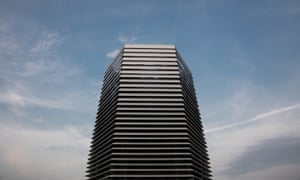
The smog-free tower in Rotterdam sucks in dirty air, filters it and returns bubbles of clean air through its vents.
Photograph: PimHendriksen.com/Studio Roosegaarde
The Dutch city of Rotterdam has opened the world’s first smog-free tower.
Co-designed by Dutch artist Daan Roosegaarde, the seven-metre high tower sucks in dirty air like a giant vacuum cleaner. Ion technology then filters it, before returning bubbles of smog-free air through the tower’s vents. It is able to clean 30,000 cubic metres of air an hour, according to Roosegaarde.
Clean air is a precious commodity. A new study has found that more than three million people die prematurely due to air pollution each year. This is projected to double by 2050 if the problem isn’t tackled.
“The smog-free tower contributes to a debate that shouldn’t be confined to politics,” says Rotterdam’s mayor, Ahmed Aboutaleb. “Air pollution is a matter that affects us all, and it requires a serious discussion. But we do need innovators like Daan Roosegaarde to start the conversation at another level.”
Roosegaarde has far-reaching ambitions for the tower, which is part of his Smog-Free Project. “It’s not only intended to be a local solution that creates clean parks or playgrounds,” he explains. “It’s also a sensory experience of a clean future, a place where people can experience clean air.”
He hopes to bring together governments, NGOs, the clean tech industry and ordinary citizens. “We can work together to make whole cities smog-free,” he says. “We can wait – or we can participate.”
The man behind the tower’s Hoover-like cleaning filter is Bob Ursem, a nanoparticles expert at the Delft University of Technology. In outdoor tests, the filter has cleaned the air by 60%, measured by the share of nanoparticles removed, and in indoor environments the reduction is even more significant, he claims. “We’ve installed it in a parking garage here in the Netherlands and it sucks and cleans both the inside and outside air,” Ursem says. “Inside the parking garage, the air became 70% cleaner.”
An aerial view of the smog free tower. Photograph: Studio Roosegaarde
But it’s not Rotterdam where the need for air filters is greatest. According to the World Air Quality Index, most of western Europe enjoys clean air, with exceptions including London, where air quality is classified as moderate. It’s a different story in the booming cities of the developing world and the Bric countries. Air quality is much poorer in China and Malaysia, for example, where most cities feature air deemed unhealthy for sensitive groups. The air in several cities, including Delhi, has been classified as very unhealthy, indicating emergency conditions.
Earlier this month, Chinese authorities shut hundreds of factories in Beijing and banned half of the country’s 5m cars from the roads in preparation for a gigantic military parade. In the days leading up to the parade, the air quality improved, resulting in pristine blue skies for the parade, only to return to smog when the ban was lifted.
According to Ursem, Rotterdam’s filter can easily be scaled to help alleviate Beijing’s smog. Yet while smog filters may offer some hope to suffering residents of booming cities, as the military parade ban suggests, no one technology or tactic can be as effective as working on the root causes of air pollution. In the tower’s case, the filters would be costly too . While neither Roosegaarde nor Ursem would disclose the cost of the tower, the filters they have developed range in price from €1,600 to more than €118,000.
Aboutaleb acknowledges the innovation’s limitations: “It may not be the answer to all our problems, but this shouldn’t be the main objective,” he says. “The objective must lie in a different perspective, a refreshing approach to a global problem.”
Esben Alslund-Lanthén, a researcher at the Danish sustainability thinktank Sustainia, says the filter is not a large-scale environmental solution but can be useful as an awareness-building: “It shows how polluted our cities are, especially from energy and transportation”.
A person who has inhaled the tower’s healthy air may find it a shock to return to the more polluted city air outside the clean bubble.
“Whether the air filter is scalable or not depends not just on its technical viability, but on whether city governments are good at learning from each other to bring about change,” argues Sascha Haselmayer, founder and CEO of Citymart, a firm that connects urban innovation projects with cities.
Some local politicians seem keen to encourage clean air-thoughts among their residents, perhaps hoping that it will make them more amenable to restrictions on fuel and dirty energy. New York City, Ursem reports, has just ordered 12 street-cleaning cars featuring the air filter. There will be a pilot air-filter project in Eindhoven, and Ursem’s team is in negotiations for a similar project in Paris.
Hydropower is often considered a clean energy source, free of climate-warming carbon dioxide emissions. But although dams have been demonized for disrupting fish migrations and flooding valleys inhabited by families for generations, this so-called renewable form of energy has largely escaped scrutiny for its climate impacts. After all, how could the atmosphere be harmed by letting a river flow through a few energy-generating turbines encased within a 50-foot wall of concrete and steel?
Hydropower is the world’s leading form of renewable energy, accounting for more than 16 percent of global electricity generation. But dam enthusiasts who tout hydro’s climate credentials may not like the news about its emissions numbers.
Studies conducted over the past decade have shown that greenhouse gases, such as carbon dioxide and methane, are produced by hydroelectric systems in potentially huge amounts.
In some cases, emissions from hydropower can even exceed those that would have been produced from burning conventional fossil fuels instead. For example, a 2014 study finds that the Curuá-Una Reservoir in Brazil emitted 3.6 times more greenhouse gases than would have been emitted had the electricity come from oil.
How hydroelectric dams produce greenhouse gases
When a dam is built for energy generation, the land upstream of the impoundment is flooded. The more than 45,000 large dams built around the world cover a combined area the size of Montana (Barros et al., 2011). For many, within their depths lies former forest land.
As the submerged trees, grasses, shrubs and soil decompose, microbes convert the carbon stored in the vegetation into gas that can bubble up to the surface and escape to the atmosphere. Carbon trapped within the soil percolates out in the form of carbon dioxide.
Age matters. Studies show that younger reservoirs may be bigger emitters than older ones, because most carbon is released from drowned vegetation within the first several years of flooding.
Location matters, too. Emissions seem to be highest from dams built in the tropics, presumably because higher temperatures give decomposer microbes the metabolic boost to do their work.
Methane matters
Methane is of particular concern. The gas is made anywhere methanogenic (methane-producing) bacteria can thrive without oxygen — so, in the guts of pigs and people, peat bogs and permafrost. Unfortunately, methane is also 25 times more potent a planet warmer than carbon dioxide over 100 years. And warm, tropical places can produce more of it.
Methane has plenty of opportunities to escape during the hydropower process: It bubbles up from the oxygen-free muck that accumulates at the bottom of reservoirs. It is churned out in the spray coming off spinning turbines. For miles, it wafts off the newly agitated surface of the river downstream from a dam.
So much methane is produced that studies suggest more than 20 percent of what humans are responsible for may come from dams, which may be releasing up to 104 teragrams of the gas annually. (This may be more than all the methane produced per year from burning fossil fuels, according to NASA.)
Lack of information or regulatory failure?
Of course, impacts from big hydro projects go beyond greenhouse gas emissions to include altered land use, the collapse of migratory fish populations and the displacement of people. Coastal erosion can occur downstream from reservoirs when sediment becomes trapped behind dam impoundments, preventing the silty particles from reaching the sea where they build and stabilize coastlines.
Despite large hydro’s detrimental impacts on life, land and atmosphere, many nations fail to include emissions associated with dams in their total greenhouse gas reporting. This gap in information makes hydro emissions difficult to track — and to regulate.
Most hydropower is concentrated in Asia, but more than 150 countries employ the technology for at least some of their energy. The Worldwatch Institute reports that “in 2008, four countries — Albania, Bhutan, Lesotho and Paraguay — generated all their electricity from hydropower,” and “15 countries generated at least 90 percent of their electricity from hydro.”
Moreover, when nations have made steps to report hydro emissions, the international hydroelectricity industry has attempted to muddy the waters by downplaying the amount of carbon degassing from their projects.
Take down the dams?
Before you think tearing down all dams is the answer, consider this: Taking down a large dam may actually release more greenhouse gases from the newly exposed, carbon-rich soil than were produced throughout the entire life of the dam.
For example, decommissioning Arizona’s Glen Canyon Dam in the United States, which provides power from Lake Powell, would theoretically produce nine times more methane following takedown than all the methane produced during Glen Canyon’s 100-year operation.
What is the solution?
What many believe would be a good first step is for the Intergovernmental Panel on Climate Change, the world’s foremost scientific authority on the subject, to ask all participating nations to report greenhouse gas emissions from hydroelectric reservoirs. Can that happen with so many questions left unanswered?
More research on the climate impacts of hydropower is needed, in more places and at all stages of big dams’ lifecycles. Until then, policymakers may be overlooking a potentially significant contributor to climate change, perhaps difficult to calculate but ever present, hidden at the bottom of a placid reservoir.
Kale Roberts is a student at the Bard Center for Environmental Policy. Sustainably Speaking is written by students, staff and faculty of the center.
Read or Share this story: http://pojonews.co/1F7KWs3
The government’s attempts to use renewable sources of energy for domestic purposes serve as a blessing in this era of global warming and climate change. Compared to developed countries like Germany, the average per capita consumption of energy in India is quite low. No industry is free from causing pollution or inflicting environmental damage. Presently, a plethora of discussions on solar energy are being held along with wind and biomass energy.
Sudarshan Ghosh Dastidar, minister for environment, West Bengal, said, “West Bengal is a power-surplus state and the Kolkata Municipal Corporation has been the premier body in the eastern region to have initiated a project on solar energy. Solar power has immense potential and is highly essential in operation theatres in hospitals to keep life-saving vaccines intact. We are trying our best to light up homes with the use of solar power in Bengal.”
Nearly 75 per cent of sponge iron industries are concentrated in and around Asansol. These emit a lot of noxious gases into the ambience, causing an alarming rise in the pollution level. “The state government would offer subsidy to sponge iron industries that employ the use of coal-based methane and the subsidy would be on offer in changing the boilers,” added Dastidar, at the Energy Forum 2015 hosted in association with Poland’s Foundation Institute for Eastern Studies, Eastern Chamber of Commerce and Indo-American Chamber of Commerce in Kolkata on 12 September.
Around 65 per cent of the demand in energy is catered from non-renewable sources of energy and only eight per cent from solar energy. KJ Nath, president, Institution of Public Health Engineers, said, “The prospect of utilising other forms of energy can mitigate the disturbing impact of climate change. Alternate sources of waste energy can be generated from biomedical wastes, agricultural, animal and human wastes. If the huge amount of human wastes produced is used in the making of biomass and bioenergy, then there can be a significant transformation in the energy resources but till today such expectations have not been met in the energy sector. The failure in commercialisation of waste energy is attributed to factors like lack of professional management and marketing.”
The West Bengal State Electricity Distribution Corporation Limited has electrified around 543,000 houses that belong to the below-poverty line across 7,636 hamlets till today. It has set up an agenda to electrify all rural homes, including those of 130, 211 below-poverty line families in Cooch Behar and Jalipaiguri with the help of the state government.
Bengal has set a target to achieve a solar power output of 100 MW by 2017. SP Gon Chaudhury, solar scientist, commented, “The contribution of the eastern region in solar power is quite small since nearly 95 per cent of solar energy is concentrated in North India. The eastern zone has a huge density of population.” The premier solar power plant came up in Asansol back in 2009. The use of more renewable energy can put a check on the coal sector and pollution can be abated. Uniform distribution of solar energy across the country is the need of the hour.
This press release was orginally distributed by SBWire
Levittown, PA — (SBWIRE) — 09/16/2015 — There are many problems that arise with heating, ventilation and air conditioning (HVAC) systems, from the condenser to the air handler, to the ventilation systems themselves. Ivey Air, Inc., a company offering comprehensive HVAC services throughout Levittown and Bucks County, PA, would like to announce that they are also available to provide in-depth air balancing services for all of their clientele throughout the region.
Air balancing is the practice of ensuring that the cooling and/or heating provided from an HVAC system permeates the entirety of a property. Homes that are poorly balanced will have inconsistent temperatures throughout the property, and regularly experience complications with their HVAC system. Ivey Air uses state-of-the-art devices and technology in order to discern the quality of air balancing in any property. If there is any kind of issue with the property’s balance, they make it their duty to fix the problem quickly and cost-effectively.
Ivey Air also proudly provides indoor air quality services for their clientele throughout Bucks County and Levittown, PA. Because of new breakthroughs in insulation and ventilation, homes are more air-tight than ever. As allergens and debris build up in the air within a property, it’s extremely important to have great indoor air quality control in order to preserve the health of the building’s occupants, which can be put at risk by factors such as pets, smoking, plants and even cooking with poor ventilation. Ivey Air assists clientele with air filters as well as duct and vent cleaning. For more information on their air quality control services, they urge individuals to contact them immediately.
Ivey Air has worked hard since their founding in 1979, by Thomas E. Woods, to earn the trust and respect of their clientele. They are available to provide extensive A/C repairs in Bucks County, PA, and the surrounding regions on top of their exceptional air balancing services throughout the region. Reach Ivey Air by phone today at 215-695-4170 or by e-mail at info@iveyair.com. Those interested can also fill out a contact form on their website.
About Ivey Air Ivey Air is a Levittown, Pennsylvania-based heating, cooling and ventilation service, repair and installation business servicing both residential and commercial property owners in and around the Levittown, PA area. They provide improvement services for indoor air quality, including air duct and ventilation cleaning and air filtration systems.
For more information on this press release visit: http://www.sbwire.com/press-releases/pennsylvania-air-balancing-services-now-available-from-ivey-air-inc-625515.htm
When the government mandates green dreams of energy efficiency, nightmares oftentimes follow. The latest wake-up call comes from California.
The Golden State’s Clean Energy Jobs Act increased taxes on corporations to fund energy-saving initiatives and green programs, primarily at schools. The initiative was supposed to generate more than $550 million annually and create 11,000 new green jobs, notes Nicolas Loris of The Heritage Foundation.
Three years later, more than half of the $297 million doled out to schools has been sucked up by consultants and energy auditors. A board created to oversee California’s initiative and provide annual progress reports has never met, The Associated Press reports. So, of course, fumbling politicians who foisted this farce on Californians are calling for better oversight.
It’s the very same unrealized vision that squandered billions of dollars on green initiatives in the 2009 federal stimulus bill. A 2012 report by the Labor Department’s inspector general found that only 11,613 people retained so-called green jobs for more than six months (about 16 percent of the goal) in what Mr. Loris calls “a classic boondoggle.”
Now, under the Clean Power Plan, the Environmental Protection Agency has set targets for states to cut overall power plant emissions to 32 percent below 2005 levels by 2030. But at what cost?
Unless states intend to follow California’s abysmal example, they must reject the feds’ latest green scheme.
The EWEA 2015 Annual Event taking place from 17 – 20 November 2015 at Paris Expo, France presents an international platform for the wind energy industry to showcase and demonstrate its latest products and services. The event features a broad conference programme, extensive networking opportunities and a large exhibition.
With Europe’s industry leaders and policymakers attending, the event provides a periodic opportunity for the wind energy sector to meet with decision-makers and define the strategic direction for wind energy activities in Europe.
The comprehensive conference programme not only delivers cutting-edge technological knowledge, but also lively debates on European policy, markets and financial issues.
Whilst Europe is undoubtedly the home of wind energy, the global marketplace is becoming increasingly crowded with new players. Every year, EWEA brings together more than 60 nationalities from around the world, making the event truly international and a great place to find new suppliers, check out new developments and build partnerships.
CONFERENCE “Where has the ‘science & research content’ gone? Nowhere! It’s everywhere!” One of the key innovations of the conference this year is that it will be the first to feature the best of industry and science and research content within every session. In response to delegates’ feedback, rather than presenting content from the scientific community in a separate ‘track’ of sessions, it will now be incorporated into the relevant topics. Organisers hope this achieves the objective of further improving the coherence of the programme, increasing the value of sessions for delegates and building bridges between research into future technologies and the challenges that industry is solving today.
To make sure the best content is selected from both communities, EWEA, in partnership with the European Academy of Wind Energy (EAWE), has appointed two topic leaders per topic – one from industry and one from the science and research community. Based on the thorough review by EWEA & EAWE members of over 440 abstracts from 33 countries, the topic leaders have developed 36 sessions under the following 9 topics:
-Turbine technologies -Environmental impacts and acceptance -Supply chain -O&M and logistics -Market development -Finance -Resource assessment -Integrating wind power -Health and safety
SCIENCE & RESEARCH EWEA 2015 continues the long-standing tradition of teaming up with the European Academy of Wind Energy (EAWE) to ensure the best content from the science and research community features in the annual conference programme.
As in previous years the Academy’s members from across Europe have reviewed the science & research abstracts and will be topic leaders and session chairs alongside their counterparts representing industry.
All resulting presentations in the conference sessions are indicated as ‘science & research’ and the full papers of these will be compiled in the printed scientific proceedings. Conference delegates can pick up a free copy of the scientific proceedings outside the conference session rooms during the event. These full papers will also be available to full conference delegates in the online proceedings along with all other presentations and posters at the end of the event.
EAWE is a registered body of research institutions and universities in Europe working on wind energy research and development: a vital academic, research community to keep Europe in the world fore-front of wind energy pre-competitive innovation. Founded in 2004, the Academy formulates and executes joint R&D projects and coordinates high quality scientific research and education on wind energy at a European level
TIMED TO PERFECTION According to event organisers, the European Wind Energy Association we are entering a stage where the European offshore wind industry must shed 26% of outlays to reach cost-competitiveness with conventional forms of energy by 2023- making this a particularly interesting time for the industry.
In a report from EY, the industry must significantly reduce costs over the next five years through a number of key actions, outlining where the following savings can be found:
These include deploying larger turbines to increase energy capture (9%); fostering competition between industrial players (7%); commissioning new projects (7%); and tackling challenges in the supply chain such as construction facilities and installation equipment (3%).
Together with clear political signals from lawmakers on regulation and support schemes, offshore wind could compete with conventional forms of energy such as gas, coal and nuclear in the first half of the next decade. Alongside the release of the EY report, three of the biggest names in offshore wind have initiated a joint declaration – called ‘United Industry’ – as part of a commitment to reducing costs in the sector.
Dong Energy, MHI Vestas and Siemens Wind Power and Renewables have pledged to undertake joint and individual actions across the whole of the value chain to deliver “major long-term and tangible advancements.”
Michael Hannibal, CEO Offshore of Siemens Wind Power and Renewables, has said: “Cost reduction remains a top priority of the offshore wind industry. We need to create profitable investments for offshore projects independent of subsidies. In a united industry, all stakeholders across the whole value chain are equally responsible to contribute and deliver. Siemens takes full ownership of this challenge. If we all do that, we will win.”
The annual EWEA event takes place in a different European city each year and has an unmatched reputation for producing fruitful networking events in amazing surroundings. This year, the event is taking place just two weeks before world leaders will gather in Paris for the UN climate negotiations. Organisers claim that there will be no better time to show policymakers the strength of the wind industry while making international business connections.